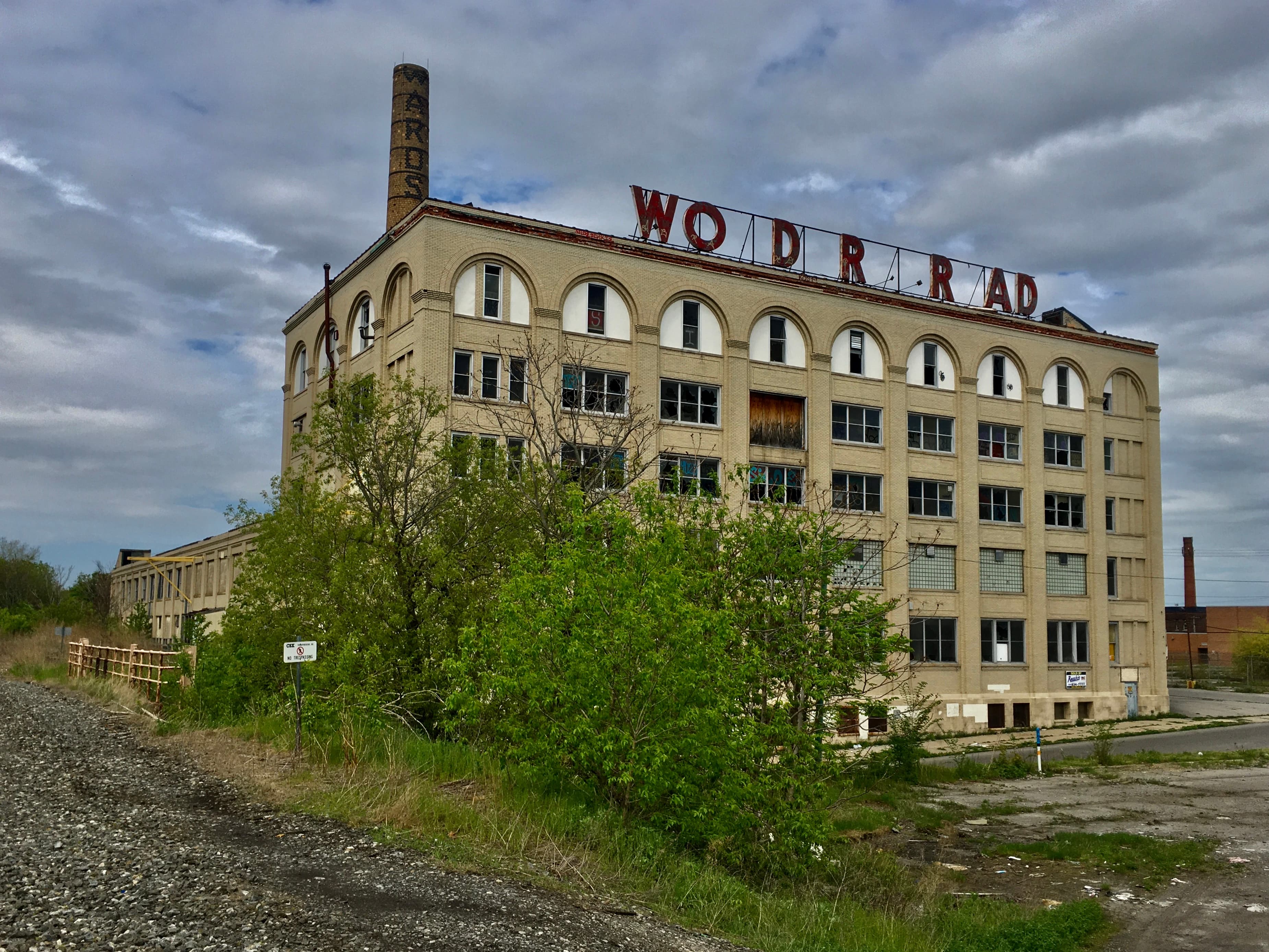
The former Wonder Bread factory at 356 Fougeron Street, Buffalo

Confidential · discussion draft · not an offer to sell securities

356 Fougeron Street · Buffalo, New York

Buffalo's nextindustrial chapterbegins at 356 Fougeron.

A phased adaptive-reuse project transforming the former Wonder Bread factory into an occupancy-ready home for advanced manufacturing, workforce development, and long-term regional growth.

0

Staged phases

each one resolves a defined risk

$0M

Redevelopment envelope

$43M selective-gut · $65M full-rehab

$0.0M

Potential HTC stack

federal historic rehabilitation credit

$0M

Permanence target

raised only after the campus operates

The purpose

Restore the property.Launch real production.Grow by evidence.

Preserve a Buffalo industrial asset, prepare it for modern production, and create a platform that can grow as real tenant demand is proven. Staged investment and decision gates mean each phase solves a defined risk before the project commits to the next level of capital.

01

Historic Property

Secure the site and confirm its structural, environmental, and preservation path.

02

Rehabilitated Campus

Modernize the building into safe, flexible, occupancy-ready manufacturing space.

03

Manufacturing Launch

Bring in an anchor tenant and other companies with validated customers or contracts.

04

Regional Growth

Expand services and future locations only after demand, occupancy, and performance are demonstrated.

Master overview

The Capital Staircase

Five staged phases. Each resolves a specific risk, funds a defined task, and unlocks the next decision. No capital moves forward until the prior phase delivers its answer.

Phase 0 · Predevelopment · $150K + up to $700K

0

Predevelopment

$150K + up to $700K

Funds
Historic tax credit, structural, environmental, and preservation design and cost diligence.
Capital
$150K fork note + up to $700K predevelopment note.
Return
Cash plus premium at the Phase 2 close — or parent equity on a pivot. Wave 1 carries a 30% flat premium; Wave 2 repays at 12–18%.
Unlocks
The credit-and-scope answer.

The question

Can a redevelopment strategy — including interior reconfiguration for clear height — still certify for the federal historic rehabilitation tax credit? The answer determines whether the working path is approximately $43M or $65M.

Why two waves

Wave 1 prices binary risk: a 30% flat premium or conversion on a pivot. Wave 2 funds the more predictable work after the fork. Both are diligence capital, not real-estate equity.

1

Real Estate

$800K / $1.5M

Funds
Acquisition of 356 Fougeron Street.
Capital
$1.5M bank facility + anchor-tenant JV equity, held 50/50.
Return
Bank debt service + a fixed JV buyout at Phase 2.
Unlocks
Site control — the ECIDA precondition for public incentives.

Why bank debt, not equity

The acquisition is kept off the project-equity table. A conventional facility against an approximately $800,000 purchase is intended to be fast and non-dilutive. Project equity is reserved for Phase 3.

The property JV

The anchor co-invests in the real estate through a 50/50 structure. The Phase 2 buyout rate remains an open term and must be set against an independent benchmark.

2

Redevelopment

$43M–$65M

Funds
Construction, with scope set by the Phase 0 answer.
Capital
Construction debt + historic tax credit equity if available + Phase 3 equity. Potential HTC stack: $13.6M.
Return
This close repays both Phase 0 waves in full, with premiums.
Unlocks
An occupancy-ready, leasable campus.

Two paths, one answer

Path A — $43M: selective gut and reconfigure, if the modified scope preserves the credit. Path B — $65M: full preservation-compliant rehabilitation. The Phase 0 answer selects the path before a dollar of construction capital moves.

What this financing event does

The closing repays the $150K fork note and the up-to-$700K predevelopment note with their applicable premiums, then funds construction and delivers an occupancy-ready campus for the anchor and gated pipeline tenants.

3

Project Equity

$25.5M–$27.8M

Funds
Only the equity slice required by the confirmed redevelopment scope. Debt, tax-credit equity, and incentives fund the balance.
Capital
$25.5M–$27.8M in the current full-rehab model.
Return
Priority share of campus net operating income, plus sale or refinance proceeds.
Unlocks
A stabilized, income-producing asset.

What this equity buys

Project equity sits behind construction debt and any tax-credit equity. It is repaid from campus NOI, with additional upside available at a future sale or refinancing event.

The range resizes after Phase 0

The $25.5M–$27.8M figure reflects the $65M full-rehab model. If the $43M selective-gut path is confirmed, the project-equity requirement is resized downward before it is raised.

4

Permanence

$200M target

Funds
Long-duration permanence capital, raised later.
Capital
$200M institutional + mission-aligned target, in a separate reserve vehicle held apart from the operating campus SPV.
Return
Governed by a definitive policy — not yet priced.
Unlocks
Durability of the campus and the regional network.

Why it comes last

Sequencing the $200M target after Phases 0–3 means it is raised against an operating campus with a real rent roll, not a renovation plan. That is a stronger position for the sponsor and the investor.

Why a separate vehicle

Permanence capital is separated from the campus SPV to preserve the operating-company posture and manage Investment Company Act exposure as reserve assets grow. Final structure requires securities-counsel confirmation.

Arched upper-story windows and the rooftop Wonder Bread sign at 356 Fougeron Street

Former Wonder Bread factory, 356 Fougeron Street. Photo: Andre Carrotflower / Wikimedia Commons, CC BY-SA 4.0.

The property

A landmark built to work — ready to work again.

The former Wonder Bread factory is a Buffalo industrial asset with the bones modern manufacturing wants: heavy structure, generous floor plates, and a preservation story worth protecting. The campus plan modernizes it into safe, flexible, occupancy-ready production space — anchored by a committed tenant and a disciplined admission pipeline.

Address356 Fougeron Street, Buffalo, New York
StrategyPhased adaptive reuse, preservation path confirmed in Phase 0
UseAdvanced manufacturing · workforce development
AdmissionAnchor tenant + companies with validated customers or contracts

Discipline

“No capital moves forward until the prior phase delivers its answer.”

The staircase is not a metaphor — it is the governing rule. Diligence capital answers the historic-credit question before construction is scoped. Site control precedes public incentives. Project equity is raised only against a confirmed scope, and permanence capital only against an operating rent roll.

Related-party disclosure

The sponsor's related-party relationship with Iron Shield Systems is disclosed. Anchor and JV terms require independent valuation benchmarking, disinterested-board approval, and the same evidence gates applied to other counterparties.

Confidential — discussion draft for prospective investors. Not an offer to sell securities. Non-binding; subject to diligence and counsel review.

The data room

Diligence, behind one door.

Approved investors and public partners work from a secure data room — the same evidence the sponsor works from, kept current as each phase delivers its answer.

  • Full project overview and phase dossiers
  • Capital Staircase models and phase economics
  • Historic tax credit and preservation diligence
  • Structural and environmental reports as completed
  • Governance, JV, and related-party terms

NDA-gated

Clickwrap NDA before any document opens

Watermarked

Every page stamped with the viewer's identity

Audited

A full access trail on every file

Already approved? Sign in to the data room

Request access

Access is approved individually. Tell us who you are and what brings you to the project.

Confidential — not an offer to sell securities. Access requires approval and an executed NDA.

The next conversation

Let's build Buffalo's next industrial chapter.

BAMC is seeking aligned investors, public partners, tenants, and redevelopment specialists who can help move the property from diligence to an operating advanced manufacturing campus.

Project contact

Elijah Williams

Buffalo Advanced Manufacturing Campus

716-524-1079

Investor, public-partner, tenant, and redevelopment inquiries.